
When bones do not heal.
Nature is really good at healing broken bones. She has done it for a very long time. In the vast majority of cases, fractures and osteotomies heal well and the patients can get on with their lives. Unfortunately in up to 10% of fractures and osteotomies, healing does not take place for a variety of reasons. Non-union treatment is something we do regularly and effectively and a field of interest in which I regularly teach and publish.
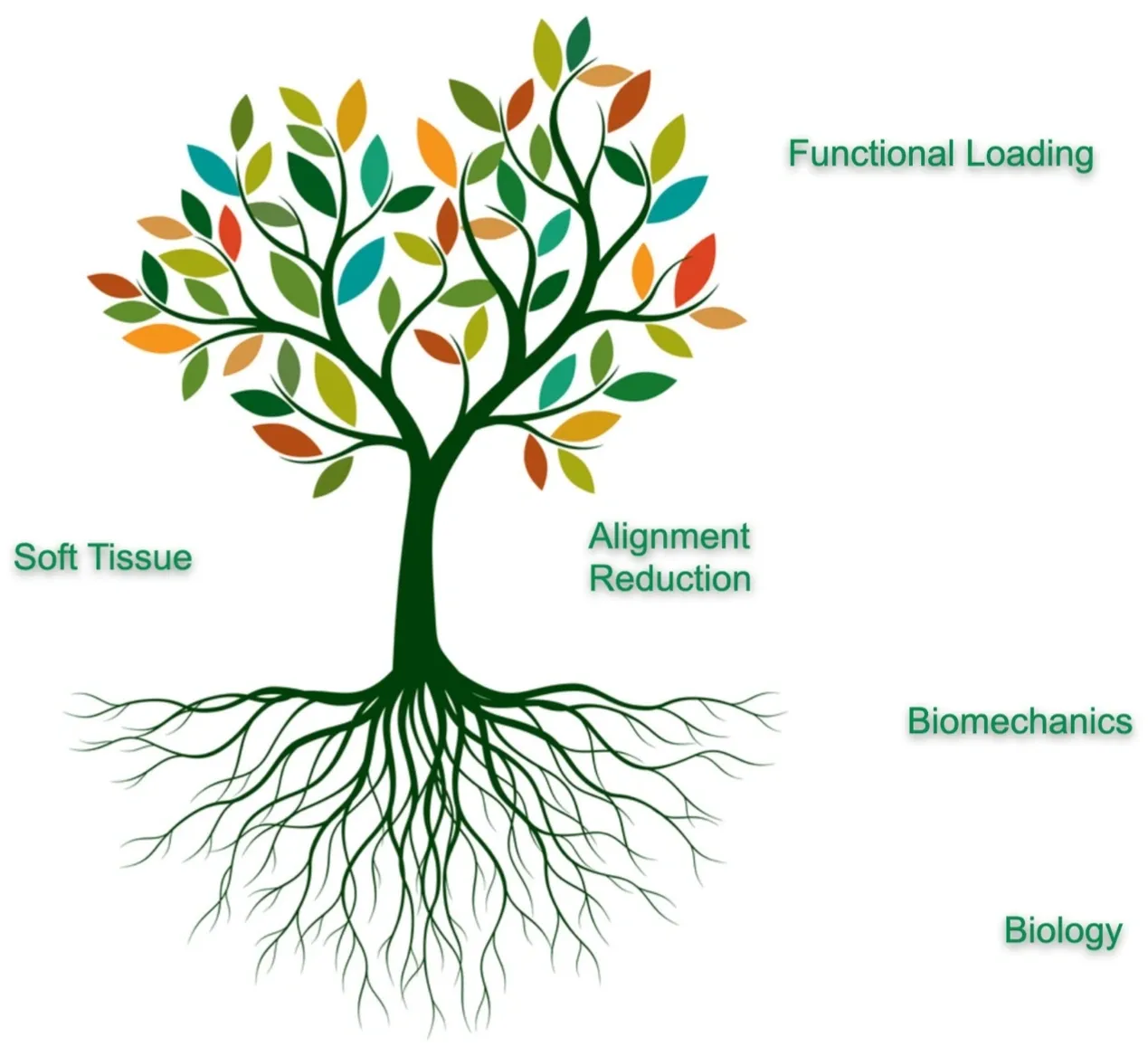
In broad terms I think of a non-union like I would consider a tree. In order for it to grow and flourish, it needs everything to be in perfect harmony.
The soil in this instance represents the patient’s systemic biology. Aspects like diabetes, vascular impairment, smoking and vitamin D deficiencies play an important role here.
The roots represent the appropriate biomecha-nical milieu. This dictates not only the type of bone formation, but also the quality and rate thereof. This component can be manipulated by the orthopaedic surgeon by using different fixation strategies.
The trunk and branches represent the fracture reduction and limb alignment. These need to be optimised for the non-union to heal. If they are not, we may have to intervene surgically to optimise these aspects.
A healthy soft tissue envelope is represented by the tree’s bark. Here we may need to reconstruct soft tissues in order to allow fractures and non-unions to heal. We may need to rely on our plastic surgery colleagues’ skill to assist in this regard.
The leaves and sunlight represent functional loading of the limb. By functionally loading a limb, the overall blood supply is improved, biological healing cascades are activated and the patient’s function is improved whilst waiting for the fracture to heal.
By addressing all the relevant aspects as symbolised by our tree, a patient’s treatment can be optimised and healing achieved in more than 80% of cases.