
For centuries the only way to attach an artificial limb to an amputee’s body was to use a socket.
Socket-based prostheses have come a long way and have provided high level function to the vast majority of amputees.
They do, however, have their problems in some patients. Skin irritation, swelling, volume change, excessive sweating and a feeling that there is a barrier between the limb and the prosthesis, to name a few.
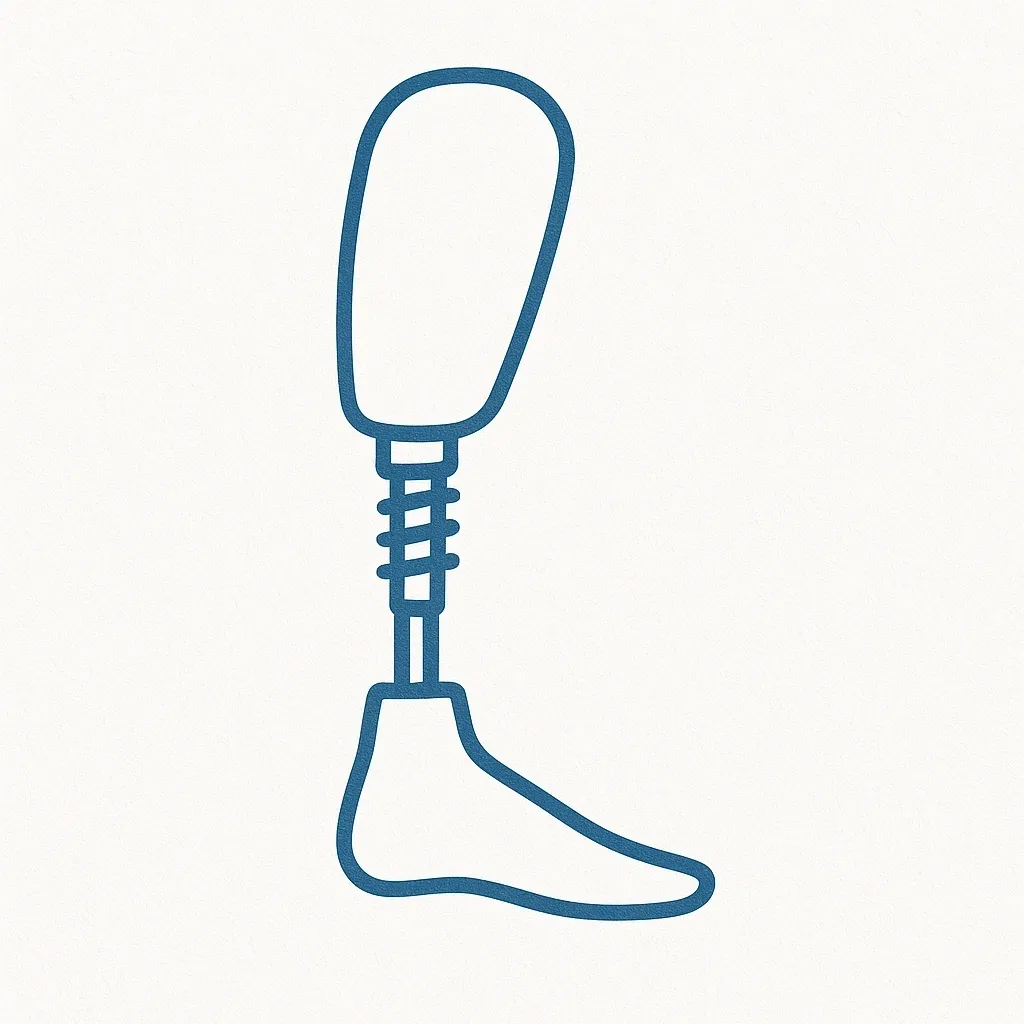
For some of these patients, a bone anchored prosthesis may be an option. Also known as osseointegration limb replacement , the process involves the placement of a bone anchor in the residuum (stump). The anchor has an abutment that sticks out of the skin. A specialised connector then provides a quick and easy way to attach the patient’s click prosthesis to the limb.
Osseointegration patients get rid of socket-based issues and almost universally report great satisfaction with the procedure and improved quality of life. Most notably, they report a feeling of osseo-perception. This is where the sensation of the floor is felt through the artificial limb and is a result of the fact that the prosthesis is anchored directly to the bone.
Of course any procedure has risks. The ‘weak spot’ of osseointegration is the opening where the abutment comes through the skin. It is known as a stoma or aperture. It is a weak spot, because soft tissue irritation can occur in this area. In extreme cases there may even be infection that sets in. The risk with modern day bone anchors and management protocols is remarkably low.
It is absolutely essential that a patient’s oseo journey needs to take place in a centre with an integrated, multi-disciplinary approach. Our team involves the surgeon (with mentor back-up from the Netherlands), specialised nursing, practice manager, care navigator, physiotherapist, occupational therapist, psychologist, dietician, operating room team, product specialist, engineer and also specialised orthotists and prosthetists.
Our first groups of trans-femoral and trans-tibial osseo-integration patients are recovering well and have improved their quality of life greatly.
As Team Osseo Stellies we are excited to improve the lives of many amputees and empowering them to walk!