

What Is Limb Reconstruction?
People often ask me what limb reconstruction actually is. Most patients have a good idea of what a hip replacement surgeon or a spine surgeon does, but limb reconstruction is harder to pin down. The simplest way I have found to explain it is to borrow an idea from military history.
The special forces of orthopaedics
Throughout history, and across every region and culture, armies have had elite units. The Persians had their Immortals. The Spartans trained from childhood to become some of the most feared soldiers of the ancient world. Japan had the samurai. Today we have units like the Navy SEALs and the SAS.
In every one of these cases, the bulk of the fighting force did most of the work. The regular army held ground, moved supplies and fought the day-to-day battles. When a very specific and very difficult problem came up, commanders turned to a smaller, specialised unit that could complete that task efficiently and with a high chance of success.
When you look at why special operations forces succeed, it comes down to three things. They are trained to an exceptionally high standard. They use specific tactics suited to the job at hand. And they are usually far better equipped than the average soldier.
Limb reconstruction sits in much the same position within orthopaedic surgery. The majority of orthopaedic problems are handled very well by general orthopaedic surgeons and other subspecialists. There is, however, a group of problems that are genuinely difficult: large segments of bone loss, fractures that refuse to heal, bone infection, legs of unequal length and complex amputations. These are the cases where limb reconstruction surgeons come in, and we approach them with the same three elements: equipment, training and tactics.
Equipment
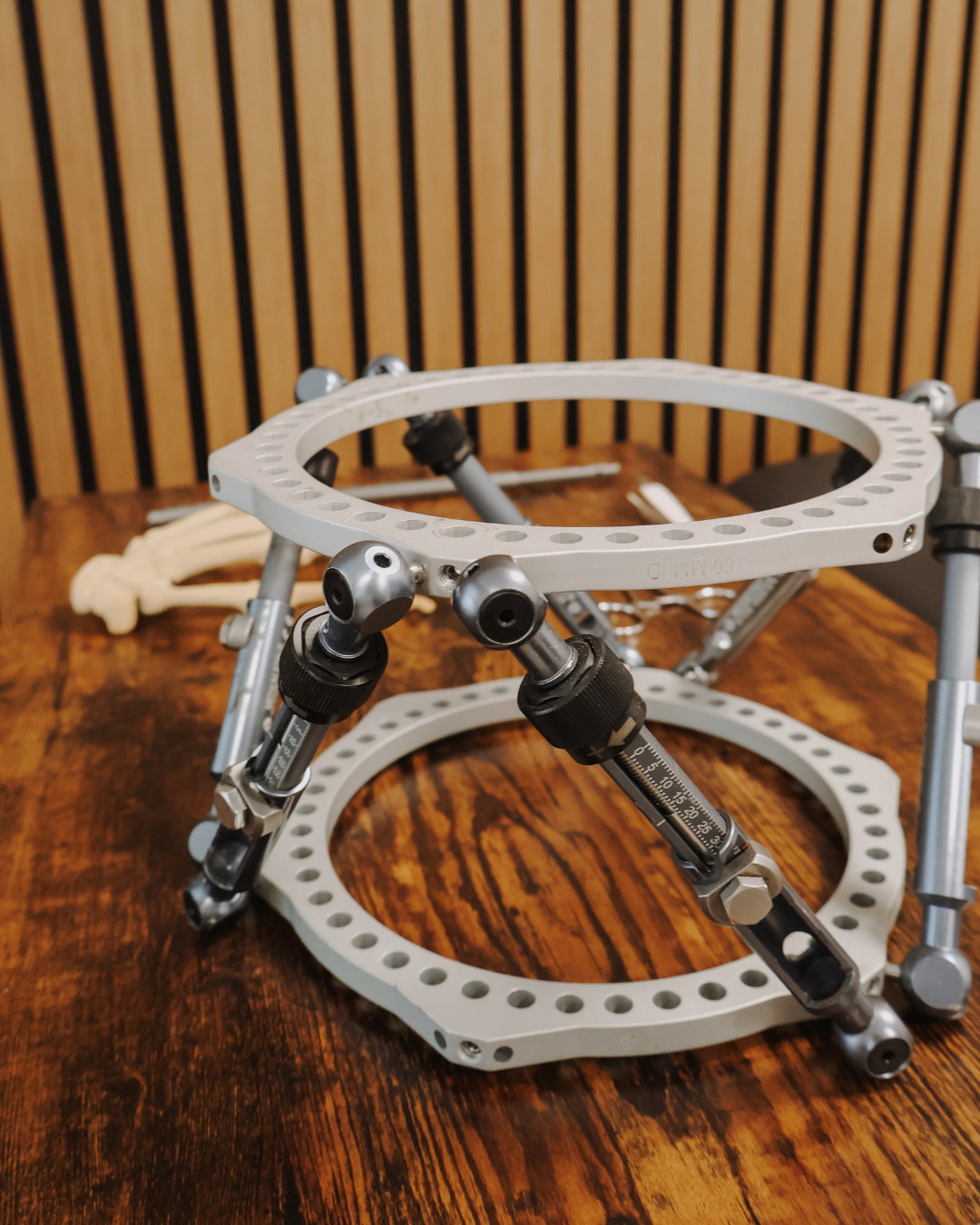
Limb reconstruction relies on a toolkit that most orthopaedic surgeons do not use day to day. The best known is the circular external fixator, the ring frame that many people associate with the field. We also use lengthening nails, which sit inside the bone and lengthen gradually, specialised fixation devices, and custom-made implants such as those used in osseointegration for amputees.
Each of these tools allows us to control bone in ways that standard plates and screws cannot. A circular frame, for example, can hold a limb stable while we slowly move, straighten or lengthen a segment of bone over weeks and months.
Training
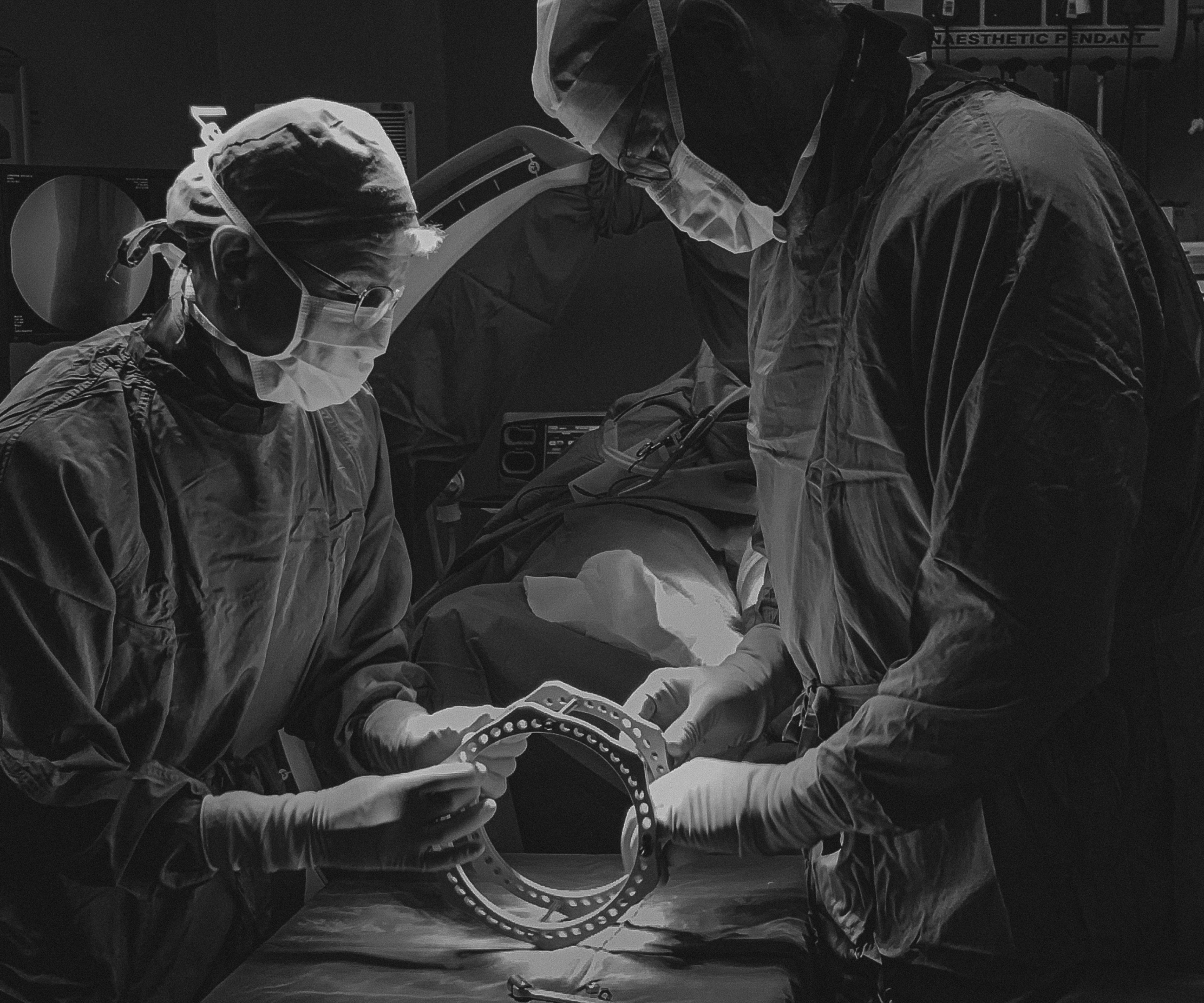
Good equipment is only useful in the right hands. These techniques and devices carry a steep learning curve, and they require intensive, dedicated training. Limb reconstruction as a community has always put a strong emphasis on education. Surgeons in the field are continually training one another, refining treatment pathways and sharing improved surgical techniques through courses, fellowships and meetings. That culture of teaching is a large part of why outcomes in this field keep improving.
Tactics
If one concept sets limb reconstruction apart from the rest of orthopaedics, it is distraction osteogenesis. The principle, developed and popularised by Gavriil Ilizarov in Siberia, is that bone which is cut carefully and then pulled apart very slowly will form new bone in the gap.
The same process stimulates the surrounding soft tissues, including muscle, nerves, vessels and skin, to grow along with it. It is a remarkably powerful tool. It allows us to regrow missing bone, lengthen limbs and correct deformities using the body’s own biology.
Distraction osteogenesis is not our only tactic. We also use extreme nailing techniques, minimally invasive plating, computer-navigated and computer-assisted deformity correction, 3D printing for planning and implant design, and a range of other methods.
Choosing the right combination for each patient is where much of the skill lies.
What limb reconstruction covers
Because of this broad set of tools and techniques, limb reconstruction covers a wide range of clinical problems. I find it useful to group them into six categories.
Complex trauma: This includes the management of severe acute injuries, as well as posttraumatic reconstruction for patients whose fractures have failed to heal, healed in the wrong position or left them with bone loss.
Bone infection: Infection in bone is one of the most difficult problems in orthopaedics. It ranges from fracture-related infection to certain cases of prosthetic joint infection and chronic osteomyelitis. Treatment often means removing all infected bone and then rebuilding what is left.
Deformity correction: Deformities can affect children and adults, and they can occur anywhere from the hip down to the foot and ankle. Some are congenital, some develop with growth and others follow injury or disease. Correcting them accurately protects joints and improves function for decades to come.
Limb lengthening: Lengthening can be used to correct a leg length discrepancy, or for stature lengthening in patients who wish to increase their height. Modern lengthening nails have made this a far more comfortable process for patients than it was in the past.
Foot and ankle reconstruction: Here we apply limb reconstruction principles to complex foot and ankle problems such as Charcot foot and the severe diabetic foot. Newer approaches like transverse bone transport are giving us additional ways to manage conditions that were once very hard to salvage.
Amputation reconstruction: This is an area that is close to my heart. It starts with the decision of whether and when to amputate, a decision that should be guided by evidence such as the LEAP study rather than by habit. It includes performing a proper amputation using modern techniques, and the rehabilitation pathways that follow. Where a residual limb is too short, we can use distraction osteogenesis to lengthen the stump and improve how the patient functions with a prosthesis. The most recent evolution in this area is osseointegration, where an implant is anchored directly into the bone, allowing a prosthetic limb to attach to the skeleton without the need for a socket.
A growing field in limb reconstruction
Limb reconstruction is a wide and still-developing field. Like the special forces units that armies have relied on for thousands of years, it combines better equipment, specific tactics and rigorous training to solve some of the most difficult problems in orthopaedic surgery.
For patients who have been told there is little more that can be done, it is often worth having a conversation with a limb reconstruction surgeon.
Questions? Reach out – dr.fbirkholtz@ior.health or reception.fbirkholtz@ior.health
More on Dr Birkholtz visit – https://birkholtz.health/about/
More information on osseointegration – https://osseo.health/